
Buying a luxury home is rarely just about finding the biggest apartment, the best interiors, or the most impressive amenities. A property may look exceptional during a 30-minute visit and still have practical issues that become obvious only after you start living there.
This is why a luxury property visit should be treated as an evaluation—not simply a viewing.
Whether you are looking at a luxury apartment in Juhu, Bandra, Khar, Santacruz, Vile Parle, Andheri West, or another premium Mumbai neighborhood, there are several details worth checking before you move from a site visit to serious negotiations.
Some can be observed by yourself. Others require questions, documents, official records, or professional advice.
This luxury property visit checklist covers 30 practical things that can help buyers make a more informed decision.
Important: A property visit is only one part of the buying process. Legal, financial, structural, and technical due diligence may require qualified professionals and document verification.
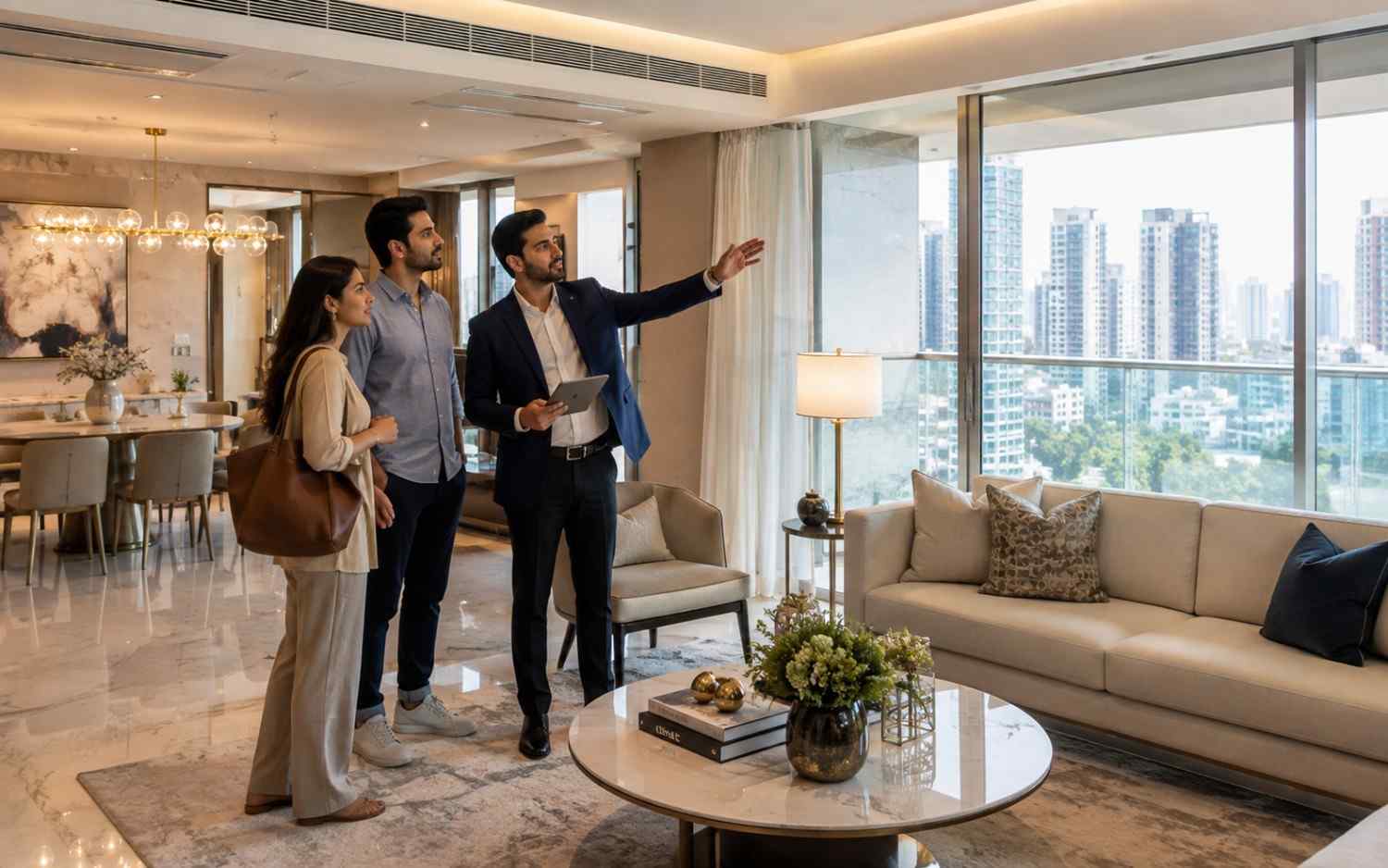
Why a Luxury Property Visit Needs More Than a Beautiful Interior
A luxury apartment is a significant purchase, so the decision should go beyond the first impression.
Premium flooring, designer kitchens, large windows, and attractive furniture can make a property immediately appealing. But these features don’t tell you everything about the home.
A serious buyer should also consider:
- How practical is the layout?
- Is the apartment naturally bright and well-ventilated?
- How much privacy does it offer?
- What is the noise level?
- How convenient is the parking?
- How is the building maintained?
- What are the ongoing costs?
- What is happening around the property?
- Are the relevant documents in order?
- Does the property suit your lifestyle for the long term?
The objective is simple: look beyond what is being shown and understand what you are actually buying.
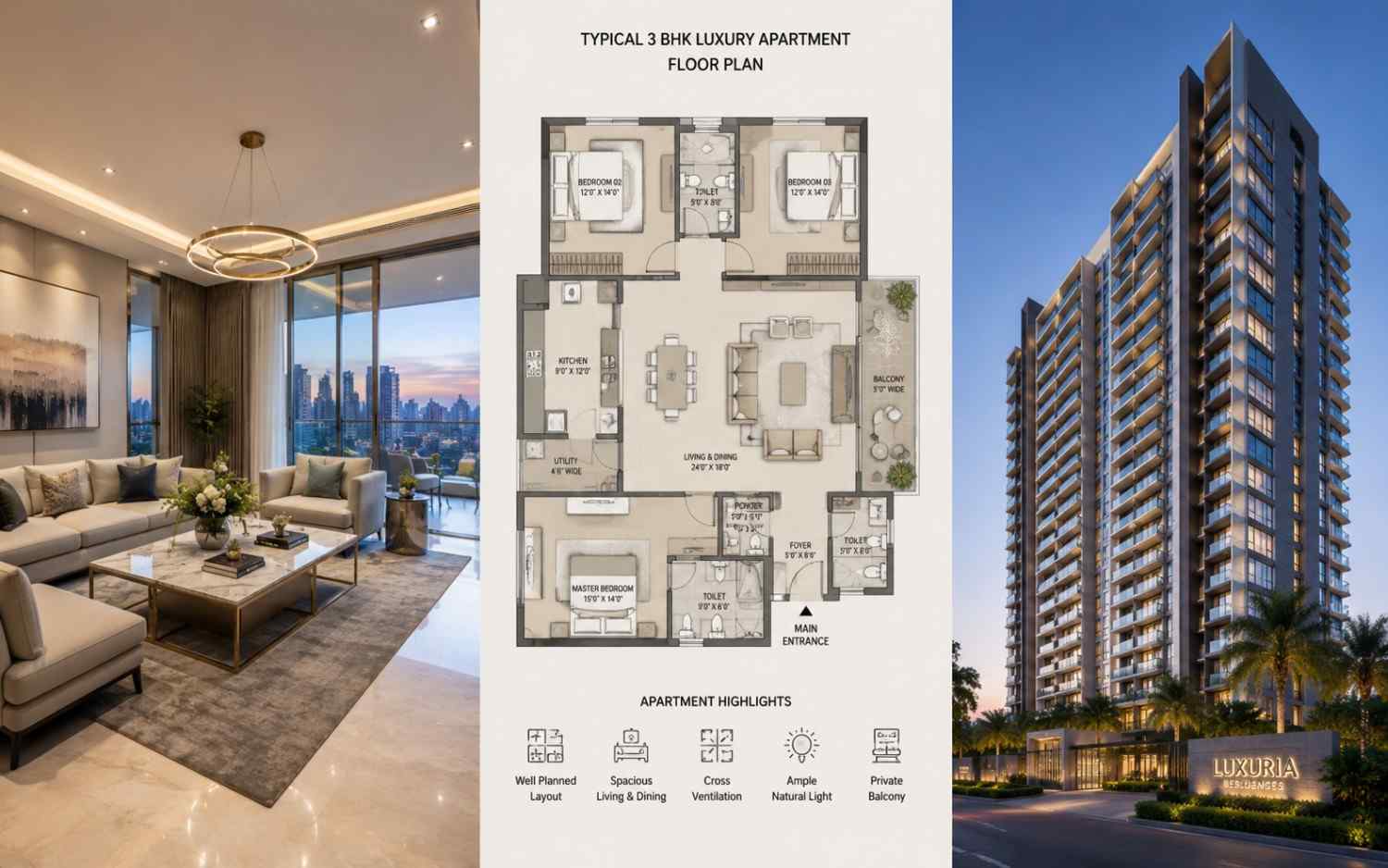
30 Things to Check During a Luxury Property Visit
1. Check the Actual Usable Layout
Don’t judge a home only by its advertised area.
Walk through every room and consider how you would actually use the space. Look for unnecessarily large passages, awkward corners, structural columns, unusable areas, or rooms that are difficult to furnish.
A well-planned layout can make an apartment feel considerably more comfortable than a larger property with inefficient planning.
What to ask:
“Can we see the approved floor plan and understand the carpet-area calculation?”
2. Observe Natural Light
Pay attention to which rooms receive natural light and at what time you are visiting.
A home that appears bright because all the lights are switched on may feel very different during the day.
If natural light is important to you, consider visiting at another time as well.
3. Check Ventilation
Open windows and balcony doors, where permitted, and notice how air moves through the apartment.
Check bedrooms, bathrooms, kitchen areas, and utility spaces.
Good ventilation is a practical consideration, particularly if you expect to spend significant time at home.
4. Look at the View—and What Could Change It
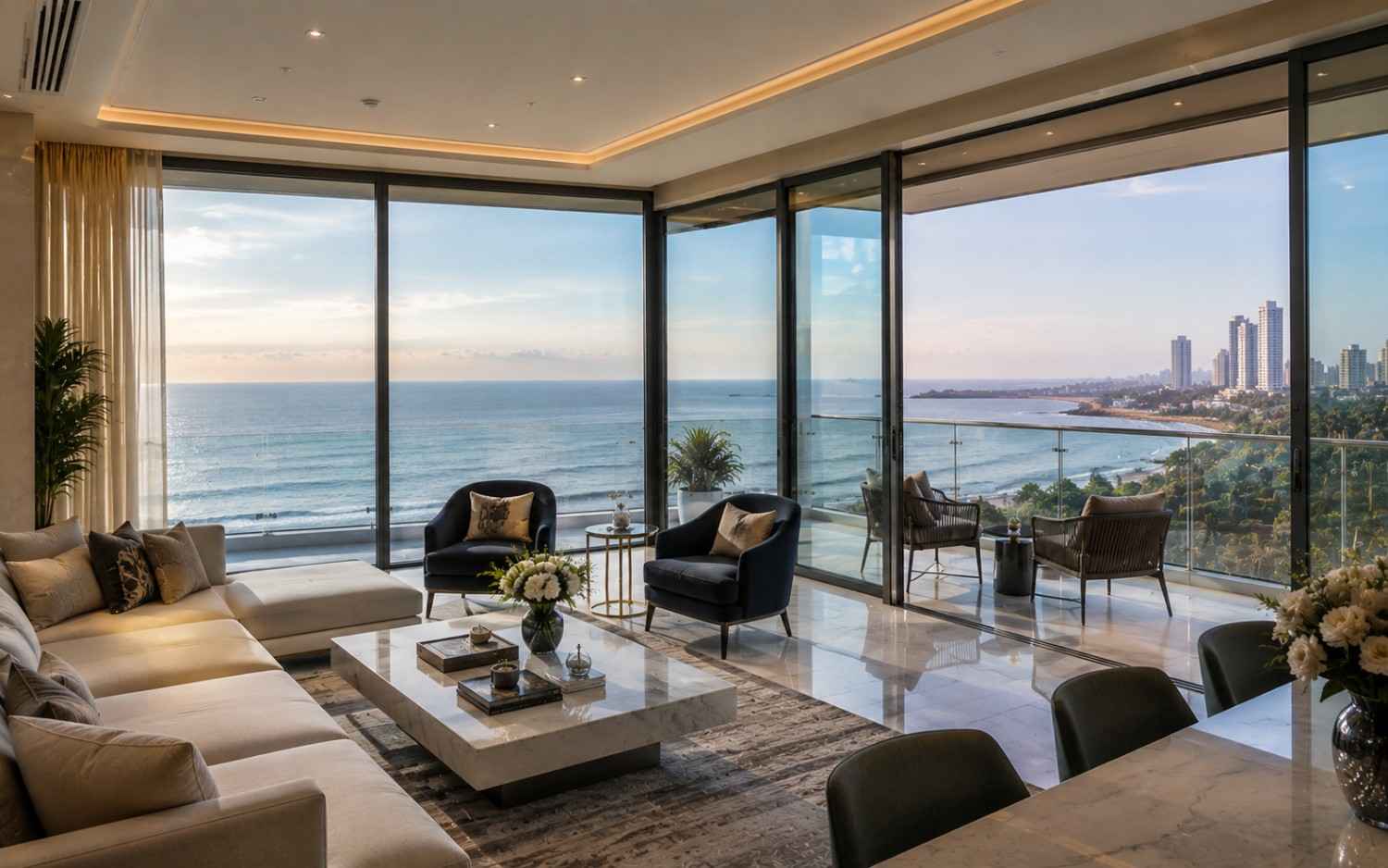
A beautiful view can be one of the biggest attractions of a premium property.
But ask yourself whether the surrounding view is likely to remain the same.
Look for vacant plots, ongoing construction and neighbouring properties that could potentially undergo redevelopment.
If the view is important to your purchase decision, verify relevant information rather than relying only on verbal assurances.
5. Stop and Listen to the Property
During a property visit, buyers naturally focus on what they can see.
Spend a few moments listening instead.
Check for:
- Road traffic
- Construction activity
- Elevator noise
- Mechanical equipment
- Commercial activity
- Noise from neighboring apartments
Visit during different times where possible because the noise environment can change significantly throughout the day.
6. Check the Apartment’s Orientation
Understand which direction the major rooms, balconies, and windows face.
Orientation can influence sunlight, heat, ventilation, and views.
Instead of relying only on phrases such as “east-facing” or “open-facing,” look at the actual surroundings and how the apartment is positioned within the building.
7. Examine Windows and Balcony Doors
Open and close windows and doors where possible.
Check whether they operate smoothly and whether there are visible signs of poor maintenance.
Also consider:
Do the windows provide adequate separation from outside noise?
This can be particularly relevant for homes located on busy roads.
8. Look for Signs of Dampness or Water Ingress
Inspect:
- Ceiling corners
- Bathroom walls
- Window edges
- Balcony areas
- Wall junctions
- Areas behind furniture where accessible
Look for stains, peeling paint, unusual patches, or evidence of previous repairs.
A mark does not automatically indicate a serious problem, but it is a reason to ask questions and, if necessary, arrange a professional inspection.
9. Inspect Bathroom Ventilation and Finishes
Don’t judge a bathroom only by its marble, fittings, or sanitaryware.
Check ventilation, drainage, water flow, storage, and visible signs of moisture.
Also ask whether any waterproofing work has been carried out previously if the property has had a history of repairs.
10. Check Water Flow Where Possible
If the owner permits it, turn on taps and showers.
Ask how the building receives its water supply and whether residents have experienced recurring water-pressure or supply issues.
Do not assume that every building has the same water arrangement. Ask for the actual situation in that particular property.
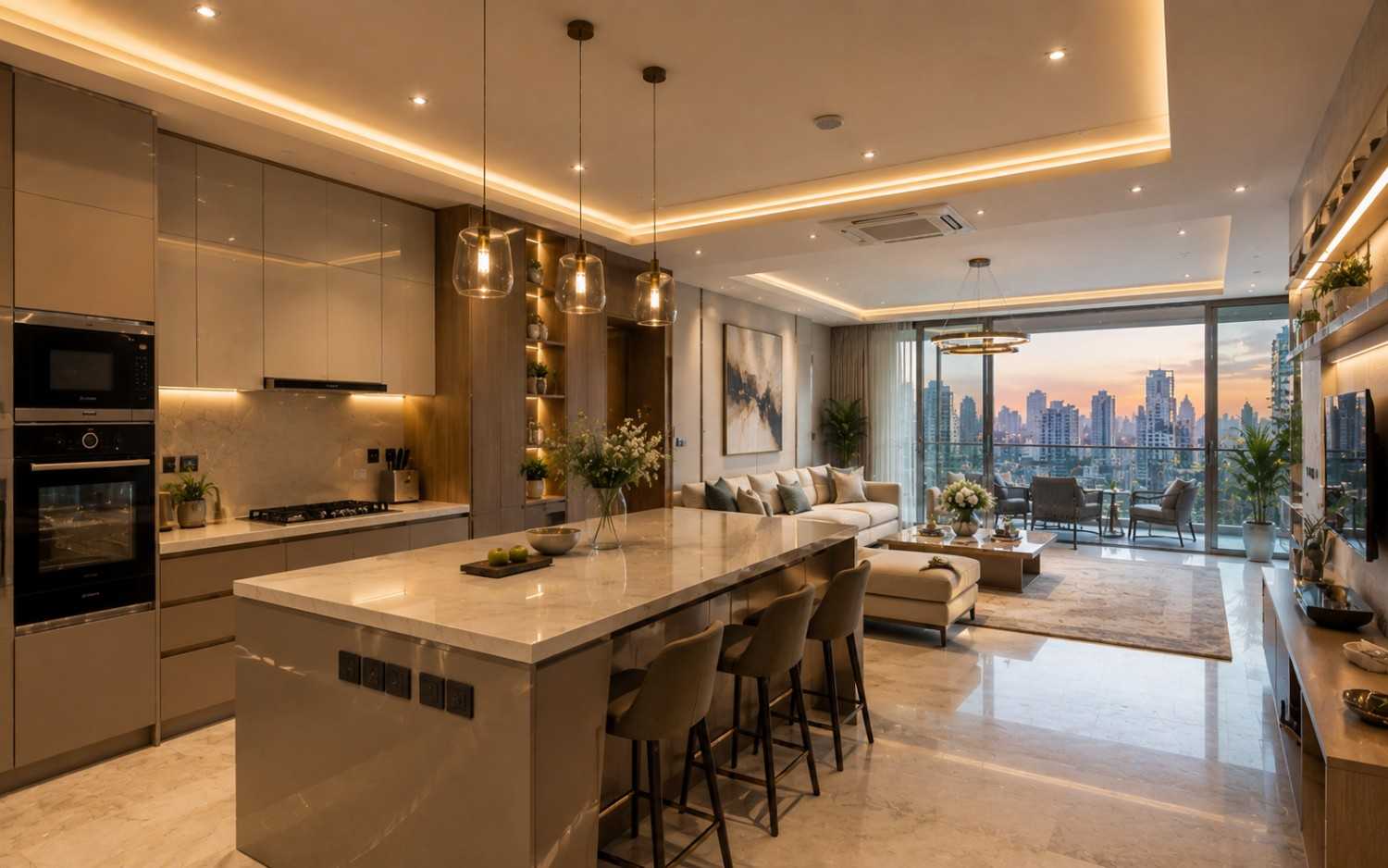
11. Evaluate the Kitchen for Everyday Use
A luxury kitchen should be functional as well as attractive.
Look at:
- Counter space
- Storage
- Ventilation
- Appliance locations
- Sink position
- Refrigerator placement
- Utility area
If you cook regularly, spend enough time in the kitchen to understand whether it fits your routine.
12. Check Storage Space
Beautiful interiors can sometimes hide limited storage.
Check wardrobes, kitchen cabinets, utility areas, linen storage, and other practical spaces.
Think about your belongings, not just the current owner’s furniture.
13. Check Bedroom Privacy
Stand inside each bedroom and consider:
- Visibility from outside
- Distance from living areas
- Corridor movement
- Neighbouring apartments
- Balcony positioning
A luxury home should offer comfort and privacy, particularly in bedrooms and private areas.
14. Examine Ceiling Height and Room Proportions
Ceiling height can influence how spacious a room feels.
But don’t evaluate it in isolation.
Consider ceiling height together with:
- Room width
- Window size
- Furniture
- Natural light
- Overall room proportions
A visually impressive living room should also be practical for everyday use.
15. Check Electrical Points and Load Requirements
Look at the number and placement of electrical sockets.
Think about where you will place:
- Televisions
- Workstations
- Refrigerators
- Washing machines
- Charging points
- Kitchen appliances
If you are planning major renovation work, have the electrical system assessed by an appropriately qualified professional before making assumptions about capacity.
16. Check Mobile Network and Internet Availability
A luxury home still needs reliable connectivity.
Check mobile reception in different rooms.
If you work from home, ask which broadband providers service the building and whether fibre connectivity is available.
This is a small detail during a site visit that can become a daily inconvenience if ignored.
17. Evaluate the Lift Experience
Don’t judge the lift only by its appearance.
Consider:
- Number of lifts
- Passenger and service lift arrangements
- Location of lifts
- Waiting time during your visit
- Access to different floors
- Ease of moving furniture and deliveries
For larger households, lift planning can have a noticeable impact on everyday convenience.
18. Inspect the Building’s Common Areas
Walk through accessible common areas.
Look at:
- Lobby condition
- Corridors
- Lighting
- Cleanliness
- Ventilation
- Lift areas
- General maintenance
The apartment may have been freshly prepared for sale, but common areas can provide a better indication of the building’s day-to-day upkeep.
19. Understand the Parking Arrangement
Ask exactly what parking is associated with the property.
Check:
- Location
- Accessibility
- Size
- Ease of entry and exit
- Whether it accommodates your vehicle
- How the parking arrangement is documented
Do not rely only on the phrase “parking included.”
The relevant documents and society records should be reviewed where appropriate.
20. Ask About Maintenance Charges
The purchase price is only one part of the cost of owning a home.
Ask about:
- Current maintenance charges
- What the charges cover
- Additional recurring charges
- Major repairs
- Planned capital expenditure
- Building services and facilities
A higher maintenance cost is not automatically negative, particularly in a building with extensive services. The important question is whether the cost is understood and appropriate for your requirements.
21. Understand the Building’s Age and Maintenance History
Building age alone does not determine whether a property is a good purchase.
Ask about major maintenance work such as:
- Waterproofing
- Lift upgrades
- Plumbing
- External repairs
- Electrical work
- Structural maintenance
Where relevant, request supporting information from the society or seller.
22. Ask About Power Backup
Find out exactly what the backup system covers.
Does it support:
- Common areas?
- Lifts?
- Water pumps?
- Individual apartments?
- Essential electrical systems?
The arrangement varies between buildings, so ask for the actual details rather than assuming full backup is available.
23. Evaluate Security and Access
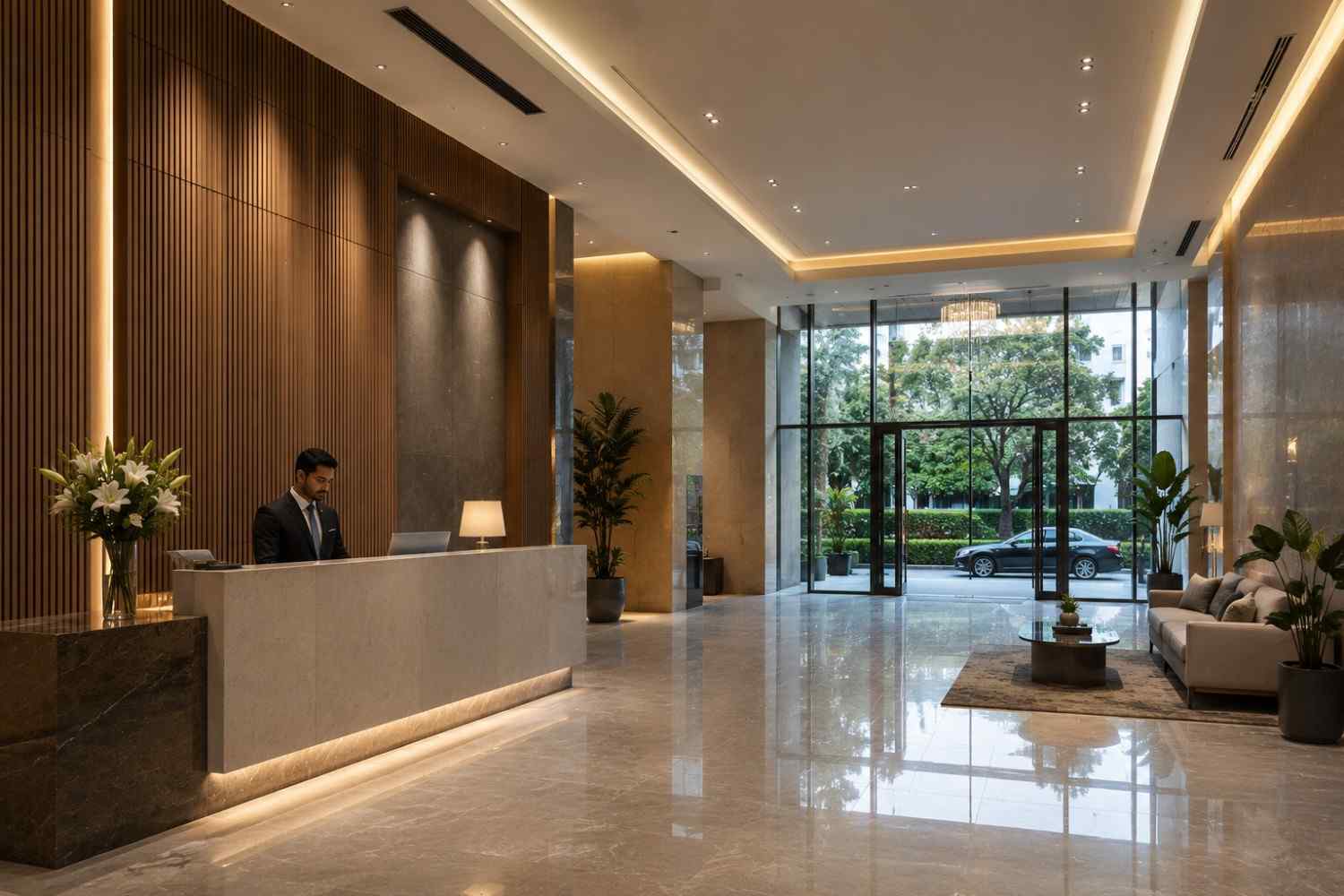
Look at how visitors, deliveries, domestic staff and residents enter the building.
Ask about:
- CCTV
- Access control
- Visitor management
- Security personnel
- Delivery procedures
- Staff entry
The objective isn’t simply to find a building with security—it is to understand how the building manages access.
24. Visit the Neighbourhood at Different Times
A location can feel very different at different times of day.
If possible, visit during:
- Morning peak hours
- Evening peak hours
- Weekends
Observe traffic, parking, noise, and pedestrian activity.
This is particularly useful when comparing properties in established Mumbai neighborhoods.
25. Evaluate Real-World Connectivity
Don’t judge connectivity only by the number of kilometers shown on a map.
Consider your actual routine.
How convenient is the property for:
- Your workplace
- Schools
- Hospitals
- Railway stations
- Metro stations
- Main roads
- Shopping
- Daily services
The best location is often the one that works best for your everyday life.
26. Investigate Possible Future Development
Look beyond the building.
Ask whether there are known construction projects, redevelopment proposals, or vacant properties nearby that could affect:
- Views
- Privacy
- Noise
- Traffic
- Accessibility
Where important, verify such information through relevant official sources and documents rather than relying solely on verbal statements.
27. Ask About Society Rules
Before buying, understand rules that could affect your intended use of the property.
Depending on the building, this could include rules concerning:
- Renovations
- Structural changes
- Pets
- Staff access
- Move-in procedures
- Common-area usage
- Other society requirements
Ask for the applicable rules rather than relying on assumptions.
28. Don’t Ignore Property Documentation
A property visit tells you what the property looks like.
Documents tell you much more about what you are buying.
Depending on the property and transaction, relevant due diligence may include ownership and title documents, applicable approvals, society records, tax and maintenance dues, parking documentation, agreements, and other property-specific records.
For applicable projects in Maharashtra, buyers can also use the official MahaRERA platform to review project information.
MahaRERA provides information intended to help homebuyers make informed decisions, including project-related disclosures.
You can also refer to the Real Estate (Regulation and Development) Act, 2016, on the official India Code website for the underlying central legislation.
External resources:
- MahaRERA – Maharashtra Real Estate Regulatory Authority
- Real Estate (Regulation and Development) Act, 2016 – India Code
- Department of Registration & Stamps, Maharashtra
For registration and stamp-related matters, buyers should refer to the official Maharashtra Registration & Stamps Department and obtain transaction-specific advice. The department is responsible for property registration and stamp-related functions in Maharashtra.
Important: A real estate agent or online article should not be treated as a substitute for independent legal or technical due diligence.
29. Understand the Total Purchase Cost
Don’t compare properties using only their headline asking prices.
Depending on the transaction, the buyer may need to account for costs such as
- Stamp duty
- Registration charges
- Brokerage, where applicable
- Taxes, where applicable
- Society-related payments
- Renovation
- Interior work
- Furniture and appliances
The exact costs depend on the property and transaction, so ask for a complete cost estimate before making a financial commitment.
For Maharashtra-specific registration and stamp-related information, refer to the official Registration & Stamps Department, Government of Maharashtra.
30. Ask Yourself One Final Question
After looking at the apartment, building, and neighborhood, step away from the sales presentation.
Ask:
“If I lived here for the next five to ten years, would this property still suit my lifestyle?”
Think about:
- Layout
- Privacy
- Location
- Maintenance
- Parking
- Connectivity
- Noise
- Future surroundings
- Running costs
- Overall convenience
A luxury property should not only create a strong first impression. It should make sense after the excitement of the viewing is gone.
What a Property Visit Cannot Tell You
One of the most important things buyers should understand is that a property visit has limitations.
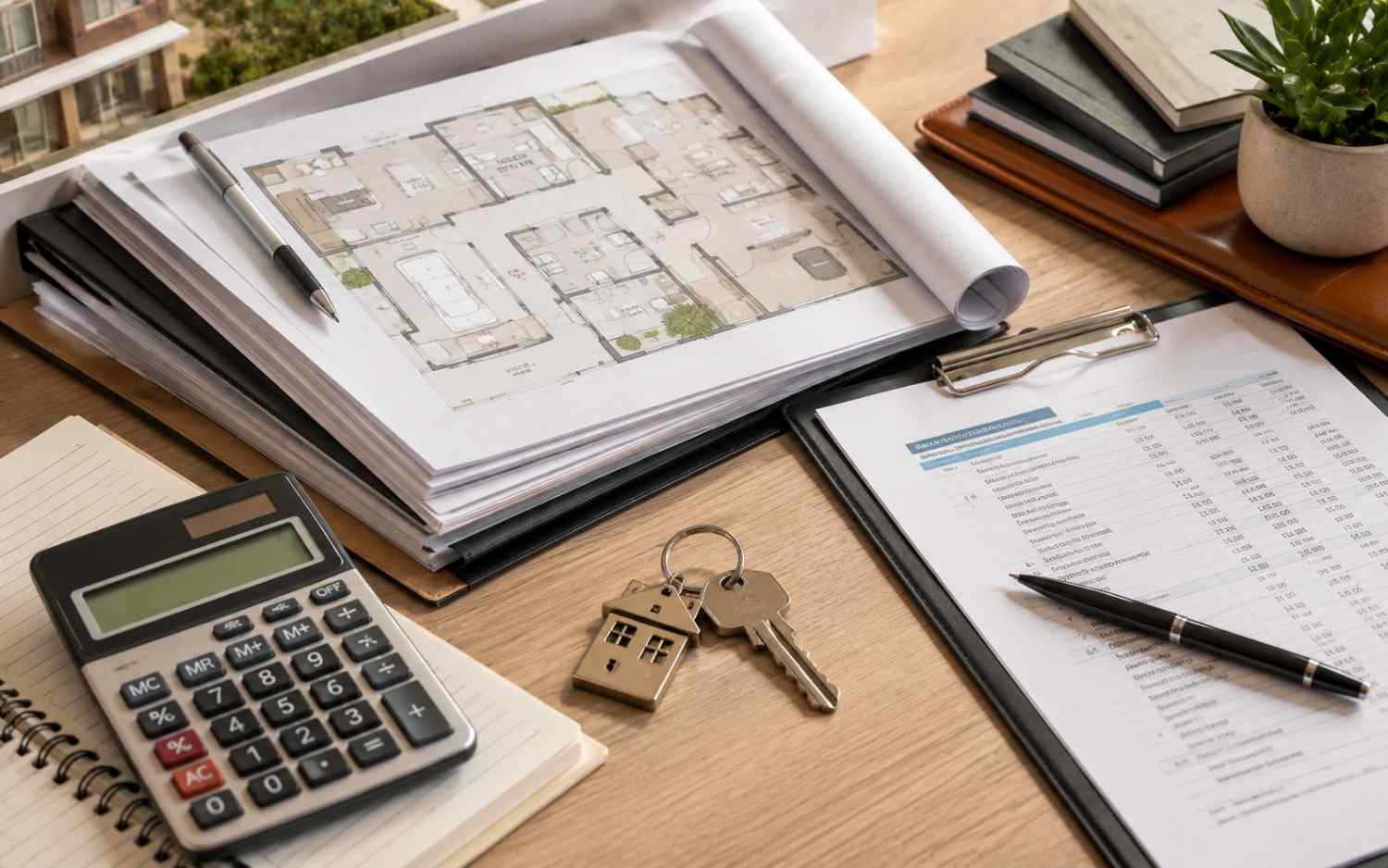
You can identify many physical and practical aspects yourself, but you cannot establish the complete legal, financial, or technical position of a property simply by walking through it.
Depending on the property, professional due diligence may be required for:
- Title and ownership
- Encumbrances
- Applicable approvals
- Sanctioned plans
- Occupancy-related documentation
- Society records
- Outstanding dues
- Property tax records
- Parking documentation
- Redevelopment-related documents
- Litigation, where relevant
- Applicable RERA information
The documents required can vary depending on whether you are purchasing a resale apartment, new development, redevelopment property, or another type of property.
This is why the property visit should be viewed as the beginning of the evaluation—not the end.
Questions to Ask During a Luxury Property Visit
Instead of asking only “What is the final price?”, use your visit to gather information.
Questions About the Apartment
- What is the carpet area?
- Which direction does the apartment face?
- Has the apartment been renovated?
- What work has been carried out?
- What fixtures and furniture are included?
- Are there any known maintenance issues?
Questions About the Building
- What are the current maintenance charges?
- What does maintenance include?
- How many lifts are available?
- What does the power backup cover?
- What are the parking arrangements?
- Has the building undergone major repairs recently?
- Are any major works planned?
Questions About the Location
- How is traffic during peak hours?
- Is there ongoing construction nearby?
- Are there known redevelopment proposals around the property?
- How convenient is the property for the buyer’s daily routine?
Questions About the Transaction
- Who is the legal owner?
- Which documents are available for review?
- Are there any outstanding dues?
- What is included in the quoted price?
- What additional costs should the buyer budget for?
The quality of the questions you ask can be just as important as what you see during the visit.
How to Compare Two Luxury Properties
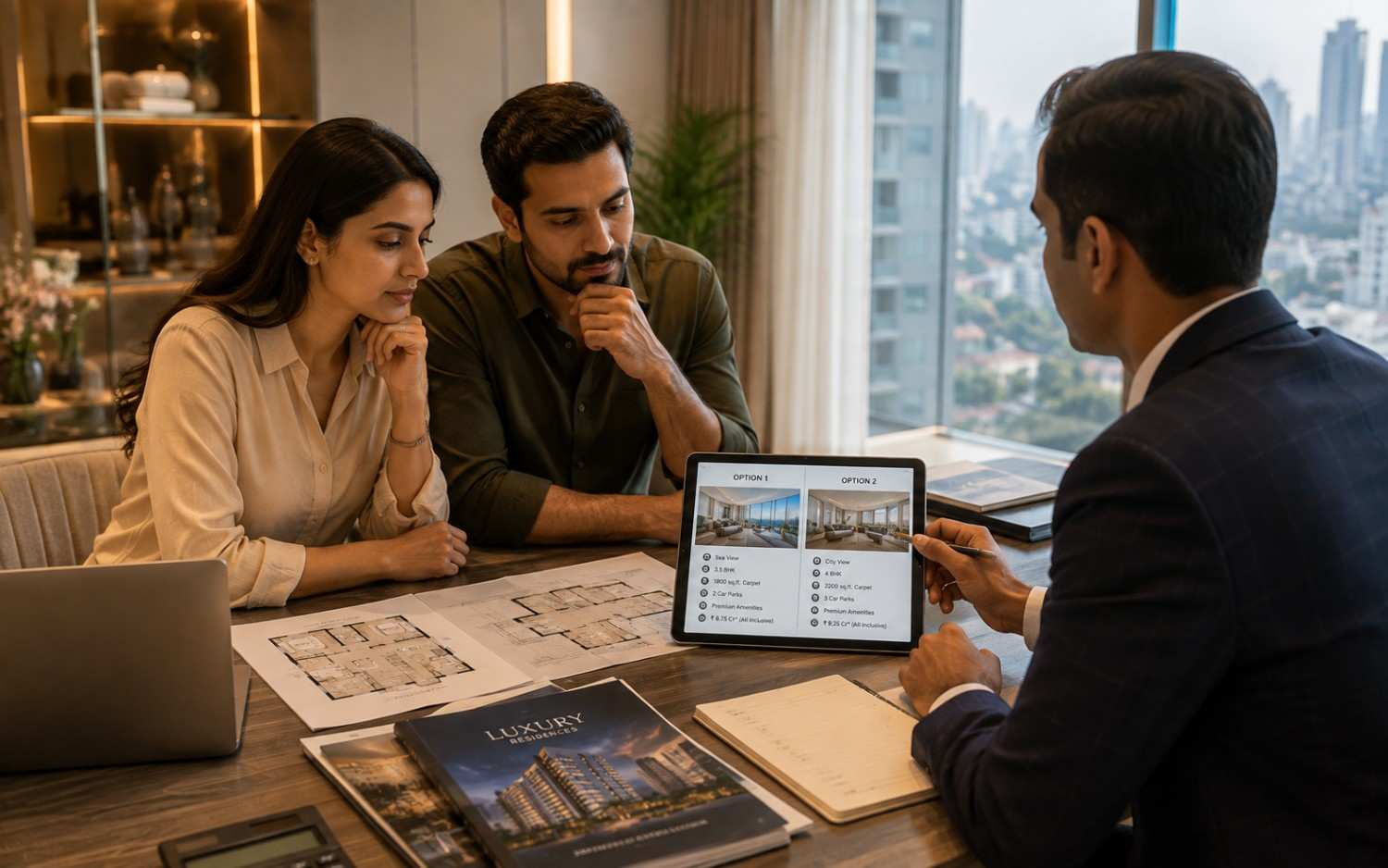
If you are visiting multiple properties, don’t rely entirely on memory.
After every visit, compare the same categories.
Apartment
- Layout
- Carpet area
- Natural light
- Ventilation
- Privacy
- View
- Condition
- Storage
Building
- Maintenance
- Security
- Lifts
- Parking
- Amenities
- Power backup
Location
- Connectivity
- Traffic
- Noise
- Neighbourhood
- Future development
Financial Considerations
- Asking price
- Additional purchase costs
- Maintenance
- Renovation requirements
Due Diligence
- Documents received
- Documents pending
- Questions requiring legal verification
- Questions requiring technical verification
This simple comparison can help you make a decision based on overall suitability rather than the strongest first impression.
Final Takeaway: Look Beyond the Luxury
A luxury property is more than its interiors.
The right property should work across several dimensions: the apartment, the building, the location, the transaction, and your long-term lifestyle.
A beautiful living room matters.
A good view matters.
Premium amenities matter.
But so do privacy, ventilation, maintenance, parking, connectivity, documentation, surrounding development, and the total cost of ownership.
The smartest approach is to use the property visit to identify the right questions—and then use proper legal, technical, and financial due diligence to find the answers.
If a property still makes sense after that process, you are in a much stronger position to make an informed buying decision.
Looking for a Luxury Property in Mumbai?
If you are searching for a luxury home in Juhu, JVPD, Vile Parle West, Bandra West, Khar West, Santacruz West, Andheri West, or other premium Mumbai locations, Tejasvi Realty can help you explore properties based on your requirements.
Tell us your preferred location, configuration, approximate budget, and key requirements, and our team can help you identify relevant options and arrange property visits.
Ready to Start Your Property Search?
Speak with Tejasvi Realty about your next luxury property purchase in Mumbai.
Frequently Asked Questions About Luxury Property Visits
What should I check first when visiting a luxury apartment?
Start with factors that are difficult or expensive to change, such as location, layout, natural light, ventilation, privacy, views, noise, and building condition. Interiors and furnishings can often be modified later.
How many times should I visit a property before buying?
There is no fixed number. If possible, visit at different times of day to understand changes in light, traffic, noise, and neighborhood activity before making a decision.
What documents should I check before buying a luxury apartment?
The documents depend on the type of property and transaction. Buyers may need to review ownership/title documents, applicable approvals, society records, dues, tax-related records, parking documentation, and other relevant transaction documents.
A qualified property lawyer should advise you on the appropriate due diligence process for the specific property.
Is carpet area more important than built-up area?
For understanding the usable area inside an apartment, carpet area is generally a more useful measure than a larger built-up or super built-up figure. Buyers should nevertheless review the actual agreement and applicable definitions rather than relying only on a property advertisement.
Should I buy a property because it has a good view?
Not necessarily.
A good view can be valuable from a lifestyle perspective, but buyers should also consider whether the surrounding view may change, along with location, layout, building quality, documentation, maintenance and price.
What should I ask about maintenance charges?
Ask for the current maintenance amount, what it covers, whether there are additional charges and whether major repairs or capital expenditure are expected.
Can a property visit reveal legal problems?
Not reliably.
A site visit can help identify visible physical or practical issues, but title, ownership, encumbrances, approvals and other legal matters require document-based due diligence.
What should I check in a luxury property’s surroundings?
Look at traffic, noise, accessibility, nearby construction, vacant plots, redevelopment possibilities, parking conditions and access to places that are important to your daily routine.
About This Guide
Published by: Tejasvi Realty – Juhu
This article is intended as a general property-buying guide for residential buyers. It does not constitute legal, tax, financial, architectural, or structural advice.
Property requirements and applicable documentation can vary from one transaction to another. Buyers should independently verify relevant information and obtain appropriate professional advice before committing to a purchase.


Join The Discussion